
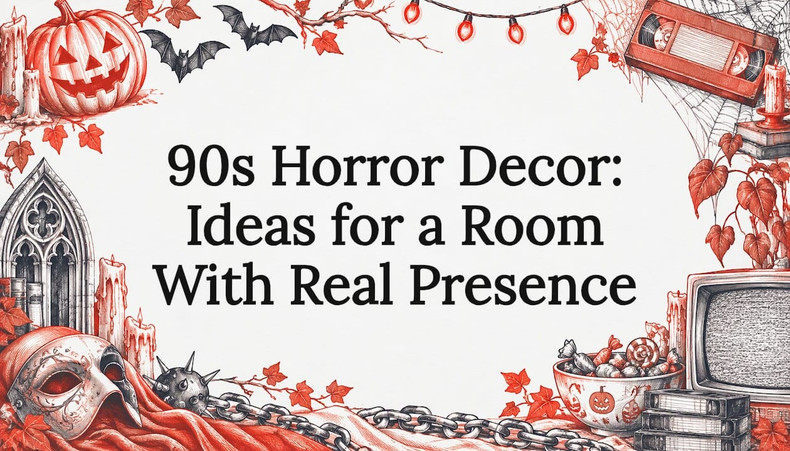
90s Horror Decor: Ideas for a Room With Real Presence

The best 90s horror decor is a mix of two moods: the playful, orange-and-black Halloween of the decade, and the slasher-era icons people grew up watching on rented tapes. Get the palette right, add a few recognizable characters, then let one heavy, life-size piece anchor the room. At 3D Curio Prints we make life-size and large 3D-printed figures, masks, lightboxes and signs for exactly this kind of display, so the advice below leans toward pieces with real weight and detail.
TL;DR
- Start with a palette: orange and black, then dark purple or green accents, with blood red for the slasher side.
- Pick two or three recognizable icons (a mask, a poster, a figure) rather than twenty small ones.
- Use VHS tapes, a vintage TV and warm or colored lighting to say “1990s” without cluttering the room.
- Anchor the space with one large, heavy piece so it reads as a display and not a pile of props.
- If you buy vintage, learn the maker’s marks first. Reproductions are common.
Table of Contents
- What 90s horror decor actually looks like
- The icons worth building around
- Build the palette first
- Use VHS to say 1990s
- Vintage originals versus reproductions
- Give the room one heavy centerpiece
- Lighting finishes the job
- Our point of view
- Bring a piece home
- FAQ
- Sources
What 90s horror decor actually looks like
There are really two looks sharing one name, and the best rooms borrow from both.
The first is the friendly Halloween of the decade. Better Homes & Gardens describes it as orange and black with dark purple and green accents, built from pumpkins, jack-o’-lanterns and cut-paper silhouettes of bats, birds or trees. The same guide ties the style to cartoon or vintage versions of Frankenstein, Dracula and Casper, and to handmade touches such as sheet ghosts and gauze cobwebs. It is cozy and a little goofy, and that is the point.
The second is the screen-horror look: slasher posters, masks, dark rooms and a lot of attitude. Think of the era’s excess. The Los Angeles Times described the 1999 film The Haunting as a deliberately over-the-top mix of Gothic, Baroque and other styles, with carved doors, giant fireplaces, griffins and sculpted faces. Horror at the time was often theatrical rather than grim. Eater’s account of New York’s Jekyll & Hyde Club, which opened in 1991, shows the same spirit: moving-eye paintings, animatronics and singing statues.

The lesson for your own space is simple. 90s horror is more fun than frightening. A room that feels theatrical and a bit tongue-in-cheek will look more authentic than one that is merely dark.
The icons worth building around
You do not need a long cast list. A few characters carry the whole decade.
Ghostface. The mask feels like it was made for Scream, but it was not. Snopes reports that Fun World created it in 1991 as a novelty ghost costume, and that it became a major horror symbol only after it was licensed for Scream in 1996. That mix of cheap Halloween-aisle origins and big-screen fame is exactly the 90s crossover feel.
Michael Myers and the older slashers. Their masks and posters were still everywhere in 90s rooms. Rotten Tomatoes’ gallery of iconic horror props lists the Michael Myers mask, the Scream mask, Jason Voorhees’ hockey mask, the Poltergeist TV, Pinhead’s box from Hellraiser and the tape from the Ring series. Any of these makes a strong focal point because people recognize them in a second.
The friendly monsters. For parents and younger fans, the cartoon versions of Frankenstein, Dracula and Casper keep the nostalgia without the nightmares. A shelf that mixes a slasher mask with a cartoon monster is very 90s.

Props that read instantly
The best props are the ones that need no label:
- A mask on a stand, lit from the side
- A framed poster or lightbox with a single character
- A vintage-style TV or tape shelf
- One large figure or bust that sets the scale for the room
If masks are your main interest, our guide to preserving and displaying horror masks covers stands, spacing and light exposure.
Build the palette first
Color does more work than any single prop, so settle it before you buy anything.
- Base: orange and black for the Halloween side, or deep black and blood red for the slasher side.
- Accents: dark purple or green, which the BHG guide names as the 90s accents. Purple is especially period-correct: Revivalist’s 90s home decor retrospective lists lavender, cherry red, hunter green, burgundy and above all purple among the decade’s bold interior colors.
- Texture: the same retrospective describes 90s rooms as tactile and layered, with velvet, chenille, plaid and shag rugs. A velvet throw or a shag rug under a display shelf does more for the era than another poster.
- Restraint: pick one dominant color and one accent. Four competing colors look like a clearance aisle.
A worked example: a spare bedroom with dark walls, a purple velvet throw on a chair, orange string lights along one shelf, and a single black-and-red poster wall. Add one mask on a stand and one large figure in the corner. That is six decisions, and the room already has a point of view.
Use VHS to say 1990s
Nothing signals the decade faster than tape. TIME’s piece on the world’s rarest VHS tape notes that original horror box art is collectible and that the format’s crackly look evokes nostalgia, and it reports a rare horror tape selling for nearly $700 in 2011. You do not need a rare tape. A few well-chosen cases, face out on a shelf or in a small display case, carry the same effect.
Pair them with a vintage TV or a TV-shaped frame, a bowl of candy within reach, and a lamp with an orange or red bulb. The idea is a scene, not a shrine: it should look like someone is about to press play on a scary-movie night.

Vintage originals versus reproductions
If you want authentic 90s and earlier Halloween paper and plastic pieces, a short checklist saves money.
- Look for maker’s marks. Country Living’s collector’s guide says genuine Beistle decorations were typically marked “Made in the USA,” “E.H. Luhrs” or “Beistle”, and that a “Made in Japan” stamp is a sign of an imitation.
- Know that reissues exist. Haunted Attraction Network explains that Beistle’s 2003 reissues show white accents, two slots in the stand and glossy paper, while later in-house reissues carry copyright dates.
- Inspect the wear. Genuine wear collects where hands actually touched the piece, not evenly in every crevice.
- Check plastic and cords. Old blow molds fade and crack, and a decades-old cord or bulb socket is not worth trusting to run unattended.
A practical approach is to buy originals only for pieces you love and handle gently, and fill the rest of the room with new, durable pieces. That keeps fragile collectibles safe and lets you display more.
Give the room one heavy centerpiece
Most 90s horror rooms fail the same way: lots of small things, nothing that holds the eye. A single large piece fixes that. A life-size figure, a big bust or a wall-sized sign gives the room a focal point, and everything else becomes supporting detail.
This is where 3D printing earns its place. Our figures and props are made life-size and heavy with quality materials, and many come with customizable options, so the piece can be matched to the character and the corner it is going into. Our line includes life-size 3D-printed characters, masks, horror merchandise, horror lightboxes and signs, and wall and desk art, which covers the three things this kind of room needs: a figure, a mask, and something that glows.
One example from the horror side of the store is the 3 ft alien medical prop, a sci-fi horror collectible that arrives as pieces you glue together yourself. For a collector that is part of the appeal: you finish the piece in your own space.
Scale and placement
- Corners and shelf ends suit tall figures. Leave about an arm’s length of clear floor so the piece can be seen from across the room.
- Busts and masks belong at eye level, not above the TV.
- Odd numbers look better. Group three items at different heights rather than two or four in a row.
- Keep walkways clear. A heavy figure should sit where nobody will brush past it.
Lighting finishes the job
Dark rooms need deliberate light. Spot a mask or figure from the side or above so the shadows fall across the face, add a colored bulb or string lights for the Halloween side, and keep ambient light low. Our guides on horror home theater decor and photo-ready horror decor with pro lighting go through placement and lighting step by step, including how to keep a room looking composed instead of cluttered.
Our point of view
We think the biggest mistake in 90s horror decor is treating nostalgia as a shopping list. The decade was playful. It put a Halloween-aisle mask on screen, turned it into a legend, and filled rooms with tape boxes and cardboard bats. The feeling comes from a few things that look like they mean it.
That is why we build heavy, life-size pieces. A figure with real weight and detail changes how a room feels, and it changes how a collector walks into it. Smaller items then support it instead of competing with it.
For collectors, cosplayers, parents and horror fans alike, our advice is the same: choose the character you love, choose the scale that fits your wall or corner, and build the colors and lighting around it.
Dominick
Bring a piece home
If you are ready to anchor your room, start with our horror merchandise, masks, lightboxes and life-size characters. Our pieces are made heavy with quality materials, and customizable options let you match a character to your space. Cosplayers can find masks and props there too, and parents can look for nostalgic characters from the same era.
Tell us which character and room you have in mind, and use the product pages to compare sizes before you decide where it will stand.
FAQ
What colors define 90s horror decor?
Orange and black are the base, with dark purple or green as accents, according to Better Homes & Gardens. For a slasher-leaning room, swap the orange for blood red and keep the black. Purple works in both versions.
Which horror characters were most recognizable in the 1990s?
Ghostface from Scream became a major symbol after the 1996 film, per Snopes. Michael Myers, Jason Voorhees and Pinhead also appear on Rotten Tomatoes’ list of iconic horror props. For a lighter look, cartoon Frankenstein, Dracula and Casper fit the era.
How do I decorate a 90s horror room without it looking cluttered?
Choose one palette, two or three recognizable icons and one large centerpiece. Add VHS cases and a single lighting accent, then stop. A figure or bust with real size does the work of ten small props.
How can I tell a vintage decoration from a reproduction?
Check the maker’s marks, the paper or plastic, and where the wear sits. Country Living notes that a “Made in Japan” stamp points to an imitation of Beistle pieces, and Haunted Attraction Network describes how 2003 reissues differ from the originals.
Is VHS still worth using as decor?
Yes. TIME reports that original horror VHS box art is collectible and that the format evokes nostalgia. A few cases on a shelf beside a vintage TV make an easy, low-cost scene.
Sources
- ’90s Halloween Decor Is Back, Better Homes & Gardens
- The House of Horrors, Los Angeles Times
- How NYC’s Kitschy-Spooky Jekyll & Hyde Club Endures, Eater
- Did the Ghostface Mask Predate Scream? Snopes
- 25 Iconic Horror Movie Props, Rotten Tomatoes
- 90s Home Decor Ideas, Revivalist
- The Surprising Story Behind the World’s Rarest VHS Tape, TIME
- Beistle Company’s Vintage Halloween Party Goods, Country Living
- Vintage Beistle Halloween Decorations: Original vs. Reissue, Haunted Attraction Network