
Start with Lighting: Anime Room Decor Ideas Under $100
Start with lighting plus one focal piece and skip the rest of the guesswork. A backlit lightbox or resin lamp anchors the room, LED strips do the ambient work, and a curated shelf or a coordinated palette finishes the job. Those three moves cost less than a single collectible and change the whole room faster than any poster haul.
TL;DR:
- Proper room hierarchy starts with lighting and a single focal piece, such as a resin lamp or backlit panel, before adding wall art or shelves.
- Curate figure displays using back, middle, front staging, and group by series to tell a story and avoid clutter, with risers and dust protection improving appearance and longevity.
- Addressable RGB lighting offers dynamic effects like gradients and chase modes, making setup more immersive, but placement and budget define feasibility.
- Renters can easily upgrade with removable adhesives, peel-and-stick wallpaper, and DIY lightboxes, all without damaging walls or requiring tools.
- A dominant focal prop, like a life-size figure or character, significantly elevates room design and functions as an eye-catching centerpiece or streaming backdrop.
Table of Contents
- Anime Room Decor Ideas by Category: Lighting, Wall Art, and Displays
- Theme-Driven Anime Room Aesthetics
- How to Curate Figure and Manga Displays So They Look Intentional
- Addressable RGB vs Standard RGB: Choosing the Right Anime Room Lighting
- Renter-Friendly and DIY Anime Room Upgrades
- Why a Focal Prop Changes Everything About Room Decor
- Setting the Mood With Sound in Your Anime Room
- Organizing and Displaying Manga Collections as Part of Your Decor
- Seasonal and Event-Based Anime Room Decor Ideas
- Anime Wallpaper and Murals for a Fully Immersive Room
- What Actually Makes an Anime Room Work
- A Life-Size Focal Piece From 3D Curio Prints
- Sources
- FAQ
Anime Room Decor Ideas by Category: Lighting, Wall Art, and Displays
Anime themed bedroom ideas tend to fail for one reason: everything gets added at once, with no hierarchy. Work through categories in order and the room builds logically instead of looking like a shrine assembled overnight.
Lighting first, always. Ambient LED strips behind a headboard or along a desk edge set the mood before anything else goes up. Layer in one focal light source, a resin lamp or backlit panel, and place it at eye level from the bed or desk chair so it reads as the room’s centerpiece rather than another accent.
Wall art comes next. You have two solid paths:
- A gallery wall of three to five posters, framed and spaced evenly, works when you commit to one color family so the wall doesn’t fight itself.
- A single backlit lightbox piece, glowing rather than flat, does more visual work than five unlit prints combined and doubles as a stream backdrop.
Flatten new posters before framing them. Curling ruins the illusion of a finished gallery, and a step-by-step poster flattening method takes less than a day.
For anime figure display ideas, floating shelves beat a cluttered desk every time. Stagger heights, group by series, and leave visible gaps between clusters so the eye has somewhere to rest.
Desk and gaming setups benefit from the same restraint:
- Keep the desk mat as your color anchor and build peripherals around it.
- Mount one LED strip behind the monitor for a glow that doesn’t wash out screen colors.
- Add a single figure or lightbox within camera frame if you stream, since that’s the item viewers will actually notice.
Theme-Driven Anime Room Aesthetics
Picking a mood before you shop saves money and prevents the mismatched look that plagues most anime themed bedroom projects.
- Kawaii/pastel: Soft pinks, lavender, and mint, paired with plush figures and warm white fairy lights. The goal is joy over polish. Kawaii styling works best when the anchor items feel personally meaningful, not just Instagram ready.
- Neon/cyberpunk: Black or dark gray walls, addressable RGB strips cycling through magenta and cyan, and a lightbox with sharp linework.
- Cozy/Ghibli: Warm wood tones, linen textiles, string lights instead of RGB, and botanical accents alongside figures.
- Dark/gothic: Deep reds and charcoal, a single dramatic backlit poster, and matte black shelving to keep the palette from feeling busy.
How to Curate Figure and Manga Displays So They Look Intentional
Random placement is what turns a great collection into visual clutter. A back, middle, front staging formula fixes that instantly: tall boxed items go in the back row, resin lamps and mid-size figures fill the middle, and small figures sit front and center where detail actually reads. Grouping by franchise rather than mixing series creates a display that tells a story instead of looking scattered, and rotating the front row seasonally keeps a shelf from going stale.
Risers and stands solve the flat-shelf problem. A cheap acrylic riser adds depth without needing a second shelf, and it’s the fastest fix for a display that looks flat under photos.
A few practical notes:
- Dust protection matters more than people expect. A basic display case with a lid protects painted figures far longer than open air, especially for resin pieces.
- Run cables along the back edge of the shelf, never across the front, so lighting doesn’t reveal its own wiring.
- Position one small LED strip behind the back row so light spills forward across every tier.
Pro Tip: Leave one gap of negative space per shelf. A shelf packed edge to edge reads as clutter no matter how nice the individual pieces are.
Addressable RGB vs Standard RGB: Choosing the Right Anime Room Lighting
Standard RGB strips give you one uniform color across the whole strip. Addressable RGB, the kind found in pixel-controllable LED panels like IllumiArts’ Anime Pro line, lets you control each individual light point, which opens the door to gradients, chase effects, and sound-reactive modes that pulse with music or game audio. That distinction is why addressable setups feel alive while standard strips feel like a single, static wash of color.
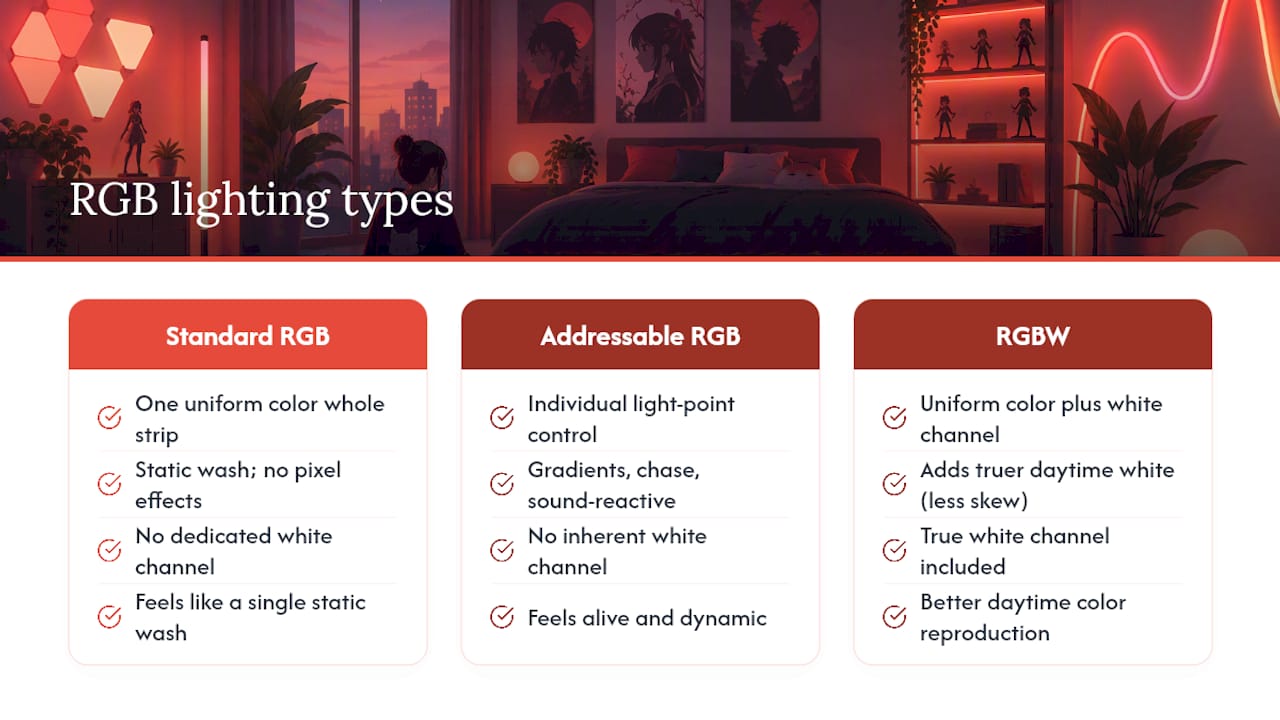
RGBW variants add a true white channel, useful if you want daytime lighting that doesn’t skew purple or blue the way plain RGB often does at low brightness.
Placement matters more than the light itself. Run strips behind the desk or headboard for ambient glow, mount panels on a feature wall for the main event, and reserve lightboxes for the one piece you want glowing above everything else.
Budget shapes what’s realistic. Entry-level RGB strip kits run cheap and cover the basics. Smart, app-controlled addressable panels and multi-panel bundles positioned as premium wall art cost more but deliver effects a basic strip simply can’t produce, including panels that double as mirrors by day and light art by night.
Renter-Friendly and DIY Anime Room Upgrades
You don’t need to drill a single hole to pull this off.
- Use removable adhesive hooks for shelving and light strips; command-strip shelving holds figures without wall damage.
- Try peel-and-stick wallpaper panels for an accent wall instead of paint, since they come off clean at move-out.
- Frame posters with washi tape instead of nails for a no-commitment gallery wall.
- Build a simple DIY lightbox insert using a thin LED panel behind a translucent print, a weekend project that mimics a $60 to $100 storebought piece.
For budget planning, a starter kit with one resin lamp, an LED strip, and a deskmat runs roughly $59 to $100, while a mid-tier setup with multiple lamps and proper shelving typically involves a moderate investment.
Why a Focal Prop Changes Everything About Room Decor
I’ve spent years thinking about how collectors actually use their space, working alongside 3D Curio Prints on life-size figures and props. The pattern is consistent: a room with fifteen small items and no hierarchy reads as cluttered, but the same room with one large, well-placed piece reads as designed. A life-size figure or prop placed near a feature wall or behind a desk setup gives the eye an obvious place to land first, then lets the smaller shelf pieces support that focal point instead of competing with it.
Setting the Mood With Sound in Your Anime Room
Visual decor gets all the attention, but sound is what makes a room feel inhabited rather than staged for photos. A small Bluetooth speaker tucked on a shelf, angled slightly toward the center of the room, does more for atmosphere than another poster ever will.
Placement matters as much as the speaker itself. Corner placement tends to muddy sound in smaller bedrooms, while a speaker set at ear height on a mid-shelf, away from walls on both sides, gives cleaner separation for opening themes and soundtrack playlists. If your setup already includes a desk speaker for gaming, consider a second, smaller speaker near the bed or reading corner so the room has ambient sound without cranking one source too loud.
Volume matters too. Anime soundtracks and lo-fi remixes of opening themes work well as background sound precisely because they don’t demand attention the way dialogue-heavy content does. Save full-volume listening for a favorite opening sequence, and keep the baseline low enough that it supports conversation and focus rather than competing with it.
If you’re building around a streaming setup, position the speaker off camera but close enough that ambient sound picks up naturally on stream, since a completely silent room reads as flat on video no matter how good the lighting looks. Pairing sound placement with your lighting plan, both aimed at the same focal wall, ties the sensory experience together instead of treating audio as an afterthought bolted onto a finished visual room.
Organizing and Displaying Manga Collections as Part of Your Decor
A manga collection stacked flat on a closet shelf is storage. The same collection faced outward on a dedicated bookshelf, organized by series, is decor. The fix is almost always visibility, not volume.
Group volumes by series and shelve them in reading order, spine out, so the collection reads as organized rather than random. For series you’re actively collecting, a small gap at the end of the row signals room to grow, which looks intentional rather than incomplete. If you own duplicate covers, special editions, or box sets, treat those as display pieces: face them forward on a middle shelf the way you’d display a figure, since box art is often illustrated specifically to be seen.
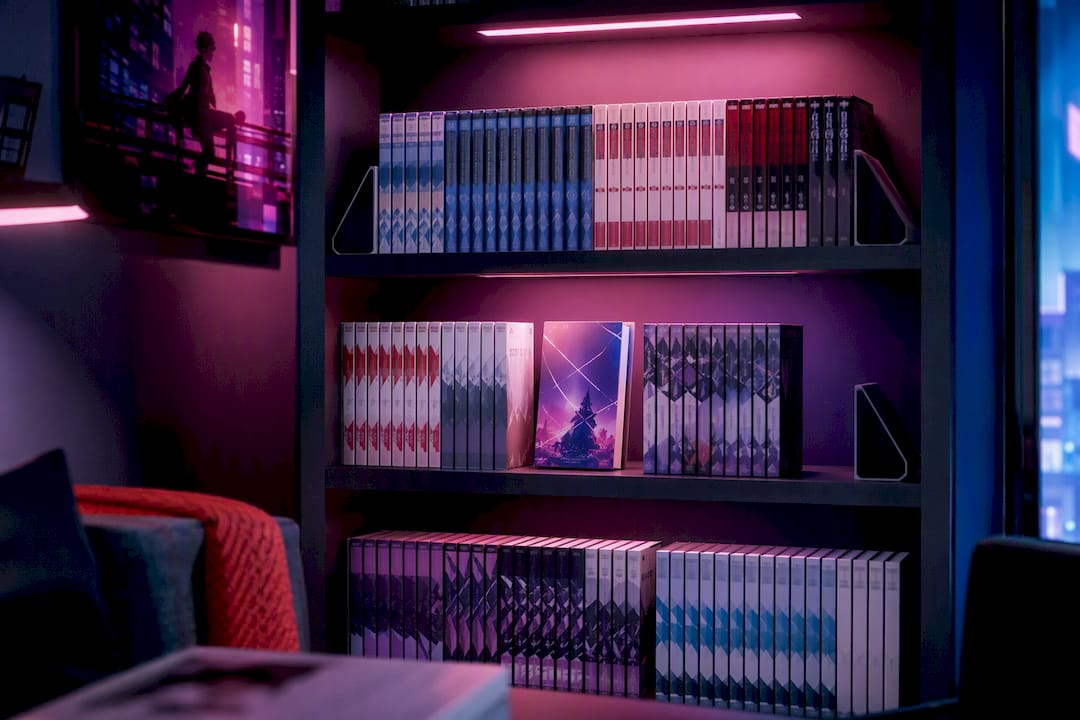
Vertical bookends shaped like simple geometric forms keep long runs from slumping, which matters more than people expect once a series hits twenty or more volumes. For smaller collections, a single face-out shelf near the entrance of the room works better than burying every volume spine-first in a closed cabinet. The goal, the same one that governs figure displays, is grouping by story rather than scattering titles across multiple shelves by size or color.
Lighting helps here too. A slim LED strip mounted under the shelf above your manga row throws light downward across the spines, making even a modest collection look like a curated library corner instead of an afterthought crammed next to textbooks.
Seasonal and Event-Based Anime Room Decor Ideas
A room that never changes eventually stops feeling special, even a well-designed one. Rotating small elements around conventions and holidays keeps the space feeling current without a full redecorate.
Convention season is the easiest trigger. Swap the front row of your figure shelf for whatever series you’re cosplaying or hunting merch for that weekend, then rotate back once the event passes. Limited-edition drops and exhibit-exclusive collectibles are worth watching for here, though exhibition merchandise runs often have narrow availability windows and pre-order deadlines, so plan purchases ahead of the event rather than expecting stock later.
Holiday touches work best kept small and swappable. A string of warm lights layered over your existing RGB setup during winter, or a seasonal-colored lightbox insert swapped in for a month, changes the mood without undoing the rest of the room. Halloween pairs naturally with darker anime aesthetics if your everyday palette leans neon or gothic already.
The easiest seasonal system is a rotating shelf box: keep off-season items in one labeled bin, swap the front row in five minutes, and the room feels refreshed every few months without buying anything new.
Anime Wallpaper and Murals for a Fully Immersive Room
Posters and lightboxes decorate a wall. A mural or full wallpaper panel replaces it, and that’s a bigger commitment worth thinking through before you buy.
Peel-and-stick wallpaper murals are the practical entry point, especially for renters, since full panels cover an entire accent wall in one afternoon without paint or a landlord conversation. Choose one wall, not the whole room, both for cost and because a single mural wall reads as a designed feature rather than an overwhelming backdrop competing with your figure shelves and lightboxes.
Scale matters more with murals than with any other decor choice on this list. A wide landscape scene or a single oversized character portrait works better than a busy collage print blown up to wall size, since detail that looks sharp on a poster often turns muddy at mural scale. Match the mural’s color temperature to your RGB lighting plan so the two don’t clash; a cool-toned cyberpunk cityscape under warm string lights will fight itself every time you walk in.
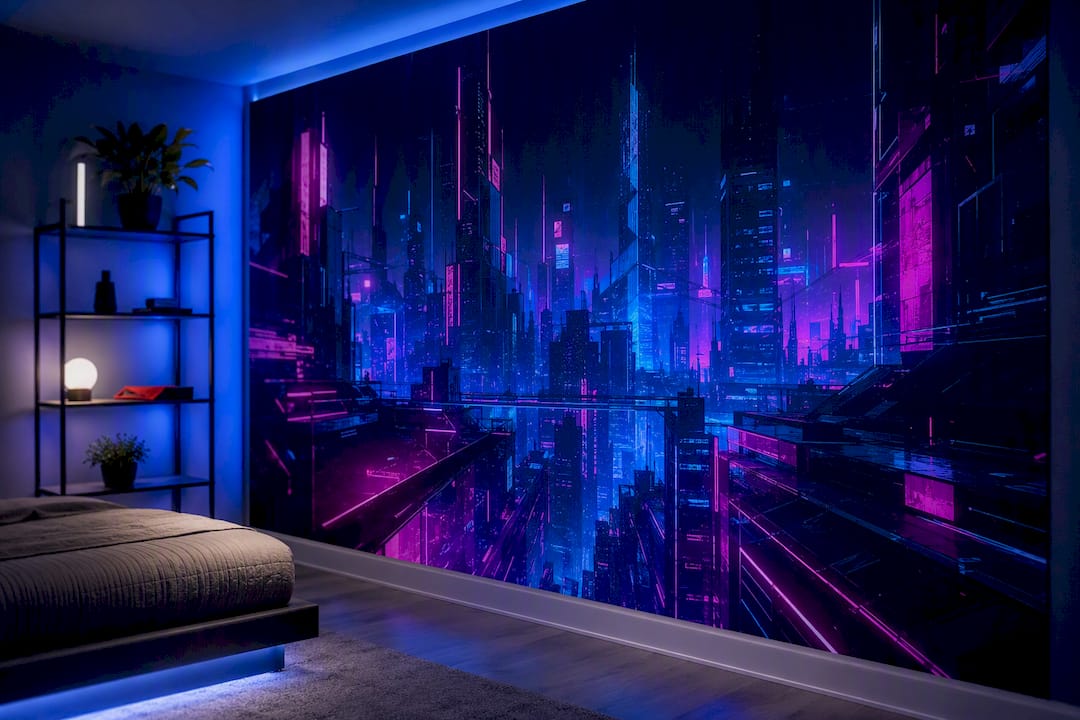
Trend data backs the shift toward this kind of full-wall immersion: design guides tracking 2024 through 2026 show a clear move away from scattered poster walls toward layered, intentional room design, where murals, lightboxes, and curated shelving work together instead of competing for attention.
What Actually Makes an Anime Room Work
Most decor guides tell you to buy more. The rooms that actually look finished do the opposite: fewer items, better lighting, and one piece that clearly outranks everything else in the room. That’s the part conventional advice glosses over. A shelf of twelve small figures with no hierarchy looks busier than a shelf with six and one riser.
Budget-wise, the honest starting point is lighting and a single focal piece, not a shopping spree. Entry-level setups focus on an LED strip and one lamp. More advanced setups add shelving and additional lighting, and premium options include a life-size piece or a lightbox wall, after foundational elements are established.
If you take one thing from this, prioritize the focal piece before the fill. Buy the shelf accessories last, not first.
— Dominick
A Life-Size Focal Piece From 3D Curio Prints
Every idea in this guide points toward the same conclusion: one strong focal piece outperforms a dozen small ones. Life-size 3D-printed characters, masks, props, and wall and desk art designed to anchor a room instead of getting lost in it.
These pieces work as a feature wall centerpiece, a streamer backdrop that reads instantly on camera, or the one prop that turns a themed bedroom into something guests actually remember. Because each piece is detailed and customizable by character, it functions less like a decoration and more like a room’s anchor point, the exact role this guide keeps coming back to. If you’ve been layering lights and shelves around a gap where a real focal piece should go, that’s the missing piece. Visit the 3D Curio Prints shop to see available characters and start a custom commission.
Sources
For lighting setups, budget tiers, and staging formulas, the Rescene Studio anime room guide and Displate’s 2026 decor roundup cover the visual trends referenced throughout. For lighting hardware specifics, see IllumiArts’ addressable RGB panel and the STG Collection lightbox guide.
- Anime Room Setup 2026: The Ultimate LED Lamp Decor Guide – Rescene Studio
- 40 Awesome Anime Room Decor Ideas in 2026 – Displate blog
FAQ
What are some popular anime room decor ideas?
The most popular approach combines ambient LED lighting, a backlit lightbox or resin lamp as a focal piece, and a curated figure shelf grouped by series. A starter kit with these three elements runs roughly $59 to $100, making it the fastest low-cost upgrade.
How do I make my room more kawaii?
Lean into soft pastels like pink, lavender, and mint, then add plush figures and warm string lighting rather than harsh RGB. Kawaii styling works best when you choose anchor items that feel personally meaningful rather than picking pieces purely for how they photograph.
What are some ideas for a Japanese-themed room?
Blend cozy, natural elements, wood tones, linen textiles, and warm lighting, with a few carefully chosen art pieces rather than a wall full of posters. A single mural or wallpaper panel on one accent wall, paired with muted lighting, creates the immersive feel without overwhelming the space.
Where can I find anime bedroom decor?
Lighting brands like IllumiArts sell addressable RGB panels and lightbox systems built specifically for anime setups, while wallpaper and poster-care partners help with wall art installation. For a life-size focal piece, custom figures, masks, and wall art are available directly through 3D Curio Prints.